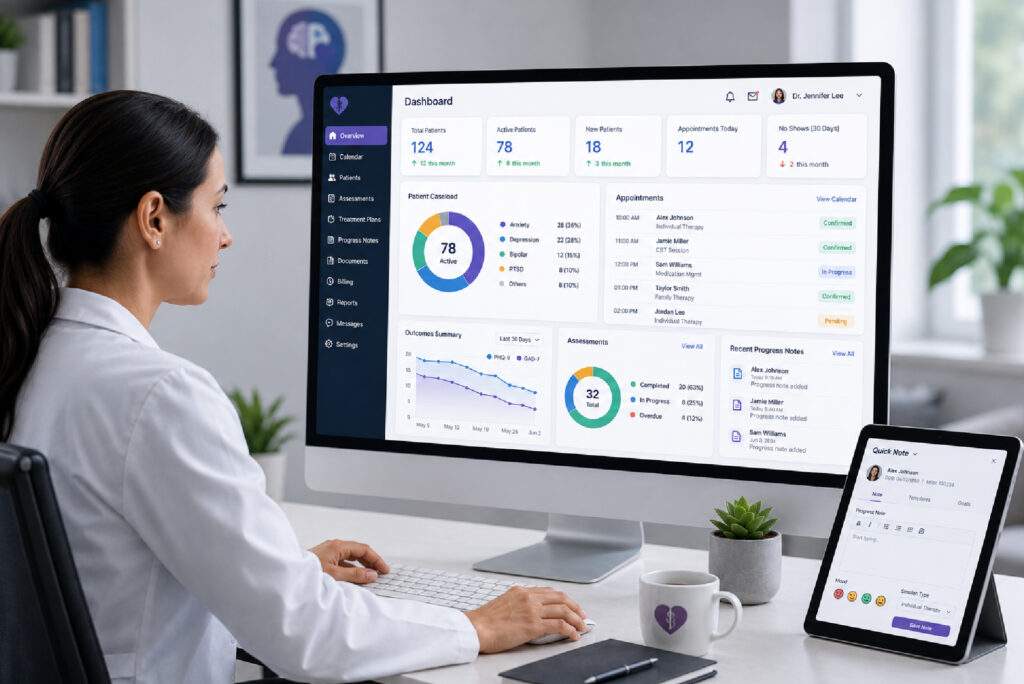
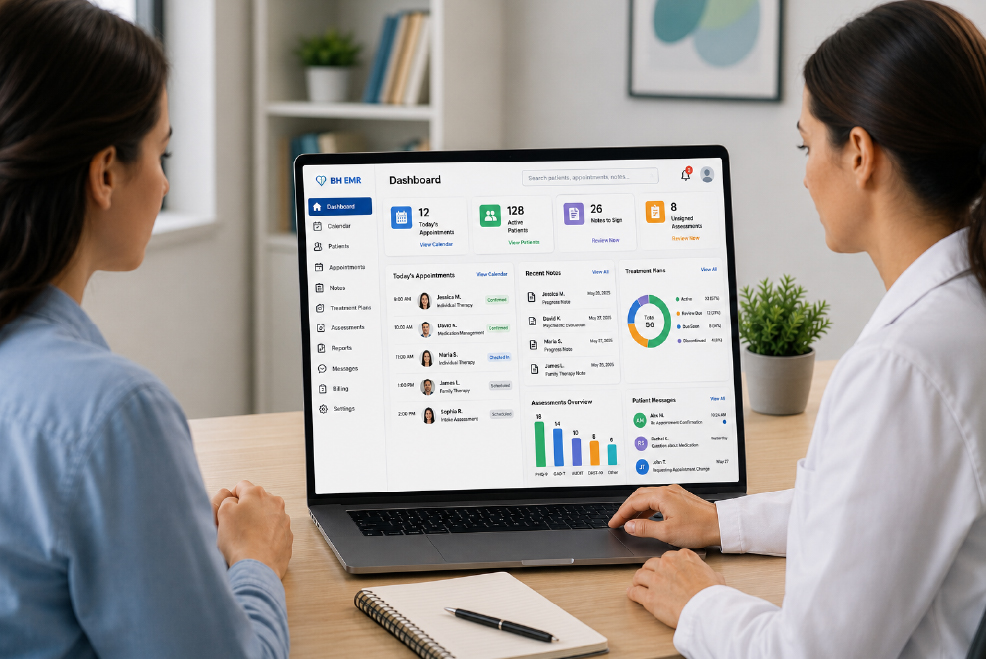
Behavioral Health Software for Integrated Clinical Workflows
Connect behavioral health documentation, care coordination, and reimbursement workflows within one integrated platform.
Why Behavioral Health Integration Software is Transforming Care Delivery
Behavioral health integration requires more than standalone documentation tools. Modern practices need connected systems that support behavioral health workflows, provider collaboration, patient engagement, care coordination, and integrated care delivery within a unified clinical environment.
Integrated behavioral health software helps reduce workflow fragmentation, improve continuity of care, and strengthen coordination between primary care and behavioral health teams.
What is Behavioral Health EMR Software?
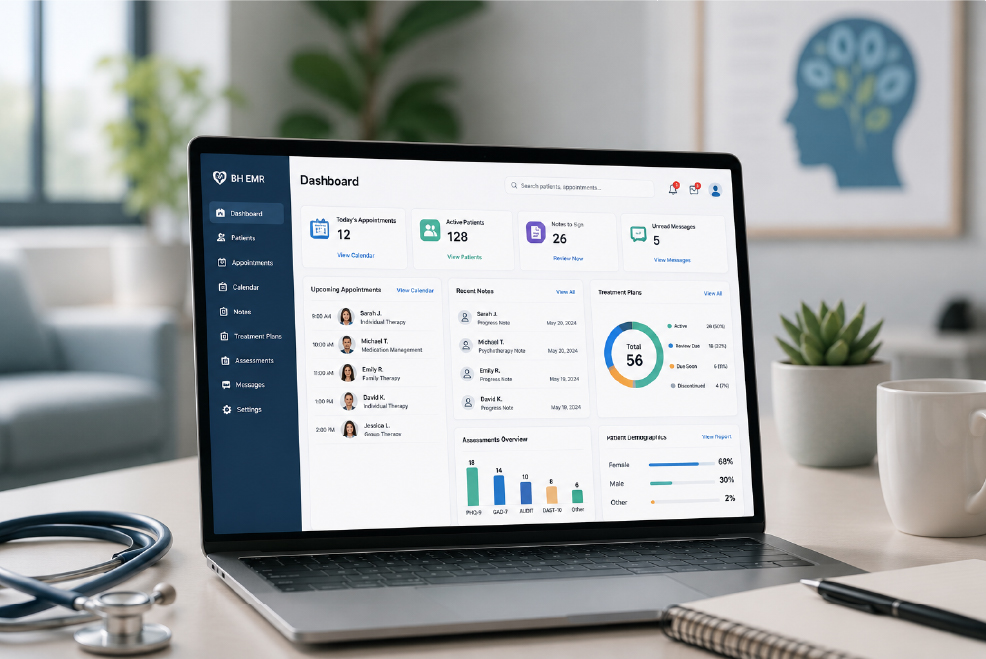
Behavioral health EMR software helps providers document, manage, and coordinate behavioral health workflows and documentation
It allows providers to:
- Document therapy notes and psychiatric evaluations
- Track behavioral health treatment plans
- Maintain structured behavioral health documentation
- Improve continuity of care across visits
This ensures that mental health care is fully integrated into everyday clinical operations.
Key Features of Behavioral Health EMR Software

Clinical Documentation
Record behavioral assessments, treatment plans, and progress notes within structured clinical workflows.
Unified Patient Records
Maintain a complete, integrated patient record across behavioral and medical care.
Behavioral Health Documentation
Support therapy documentation, psychiatric evaluations, and ongoing behavioral health records
Longitudinal Patient History
Track patient mental health progression across time with structured digital records.
Workflow Automation
Streamline scheduling, billing, intake, and administrative tasks in one system.
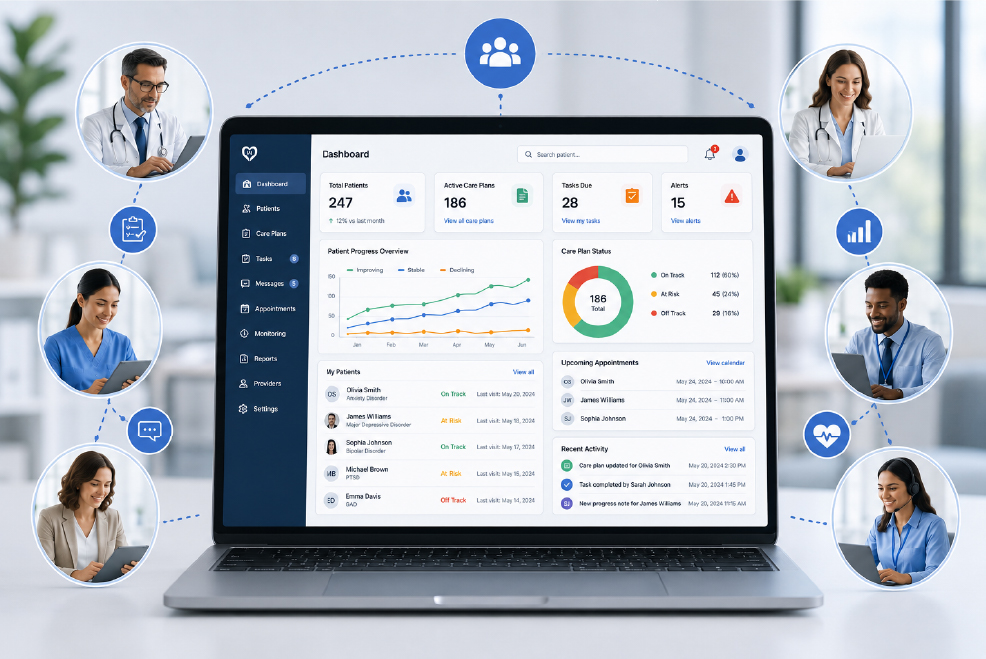
Care Coordination
Enable real-time collaboration between primary care providers and behavioral health specialists.
Integrated Behavioral Health System for Whole-Person Care
An Integrated Behavioral Health System connects mental health and physical health workflows into a single coordinated care model.
This enables clinicians to:
- Identify behavioral health risks earlier
- Improve treatment adherence
- Reduce fragmentation of care
- Enhance collaboration across providers
This approach ensures patients receive continuous, whole-person care instead of disconnected treatment episodes.
Primary Care Behavioral Health Software Benefits
Primary care behavioral health software enables clinicians to manage mental health conditions directly within routine care workflows.
Key benefits include:
- Earlier identification of behavioral health conditions
- Improved patient engagement during visits
- Reduced dependency on fragmented external referrals
- Better continuity of care
- Lower administrative complexity
Collaborative Care Management Software Capabilities
Collaborative care management software enables structured coordination between multiple providers involved in a patient’s care journey.
It supports:
- Shared care plans across providers
- Real-time patient progress tracking
- Task assignment and workflow coordination
- Continuous monitoring of outcomes
- Shared care visibility
- Coordinated follow-up workflows.
This supports coordinated communication between PCPs, behavioral health specialists, and care managers.
How Behavioral Health Integration Software Works
Primary care behavioral health software enables clinicians to manage mental health conditions directly within routine care workflows.
Key benefits include:
- Earlier identification of behavioral health conditions
- Improved patient engagement during visits
- Reduced dependency on fragmented external referrals
- Better continuity of care
- Lower administrative complexity
How Behavioral Health Integration Software Works
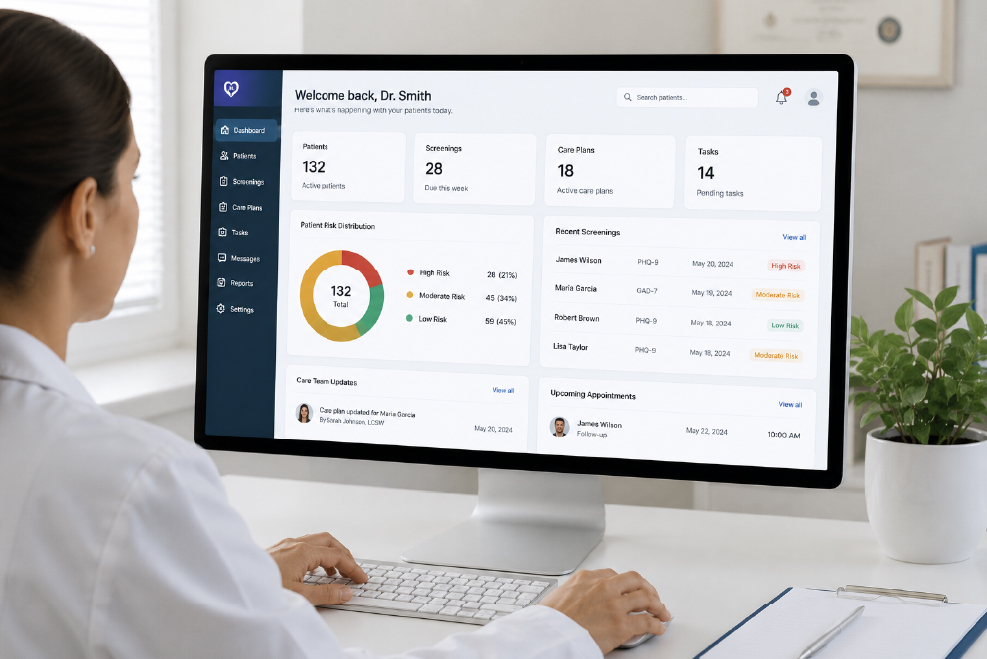
- Patient completes behavioral screening during intake or visit
- Behavioral health screening results help identify patients who may require further behavioral health evaluation or follow-up.
- Clinicians document findings within the integrated EMR/EHR workflow
- Care plan is created within the same workflow
- Follow-ups and outcomes are continuously tracked
See How Behavioral Health Integration Fits Into Daily Clinical Workflows
Why This Approach Outperforms Traditional Systems
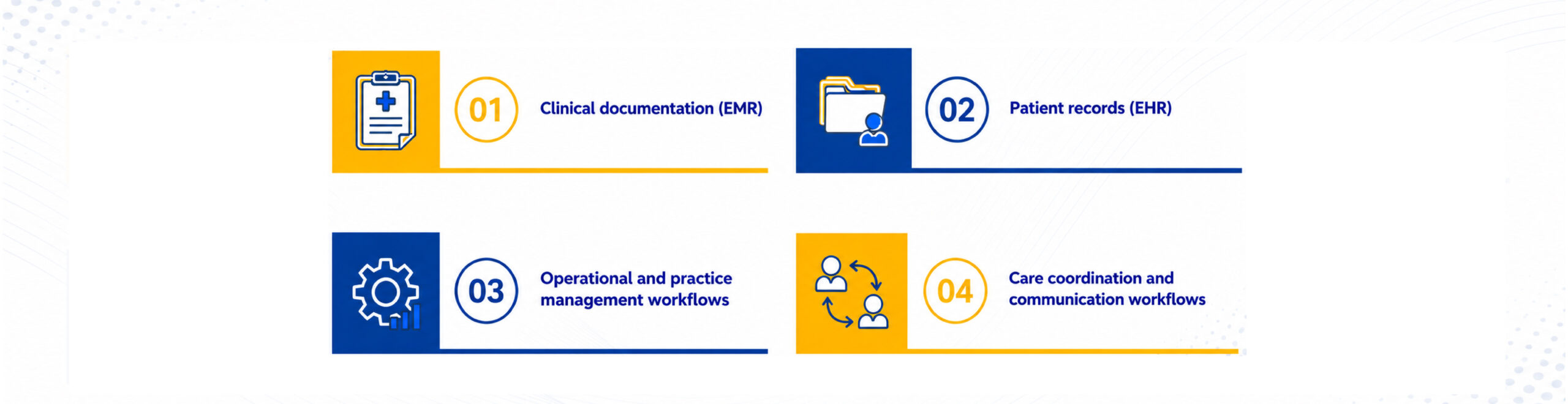
Unlike standalone behavioral health EMR software or fragmented systems, integrated platforms unify:
Transform Behavioral Health Delivery
Integrated behavioral health requires more than standalone documentation tools. Practices need connected workflows that unify clinical care, documentation, revenue cycle workflow, patient engagement, and provider coordination within one system.