
Chronic Care Management Software for Medicare Workflows & Recurring Revenue
Manage patient engagement, documentation, reimbursement workflows, and Medicare compliance through one connected CCM platform


What is Chronic Care Management (CCM)?
Chronic Care Management (CCM) is a Medicare-reimbursed program that allows providers to deliver ongoing, non-face-to-face care coordination for patients with two or more chronic conditions.
How a Chronic Care Management Program Works
A structured CCM workflow ensures both clinical effectiveness and billing compliance:
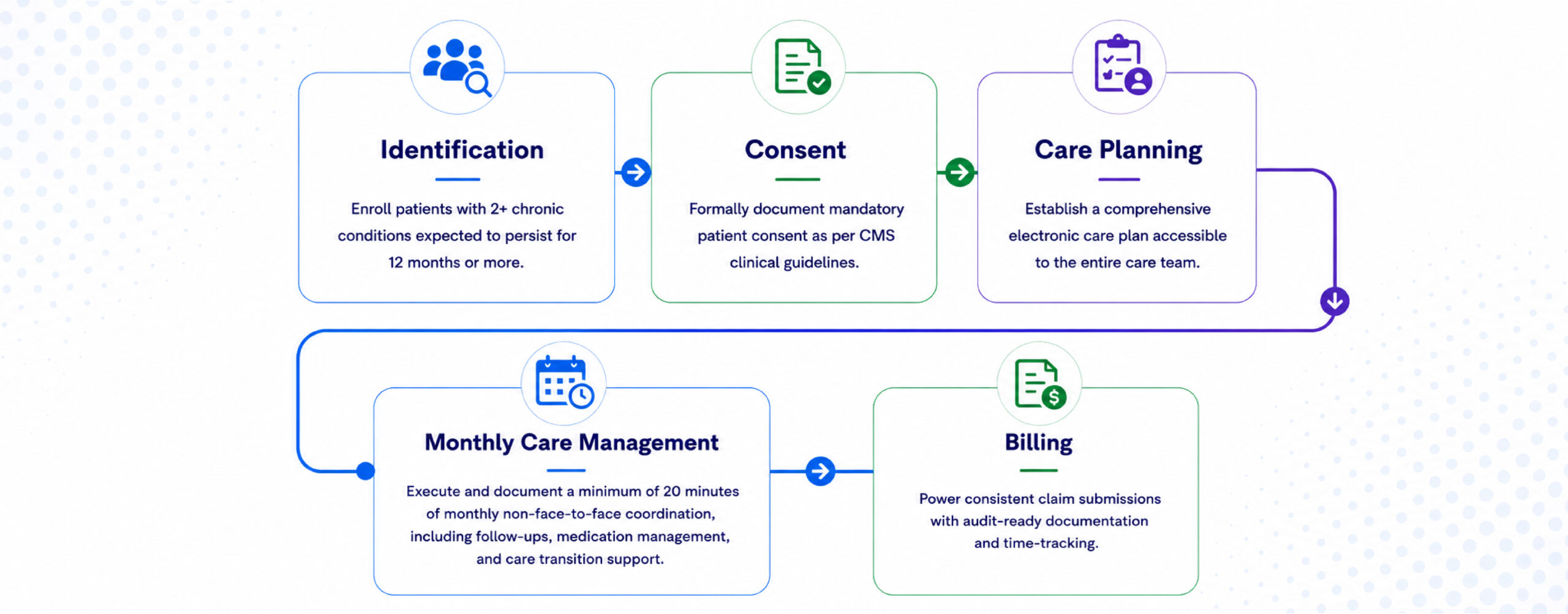
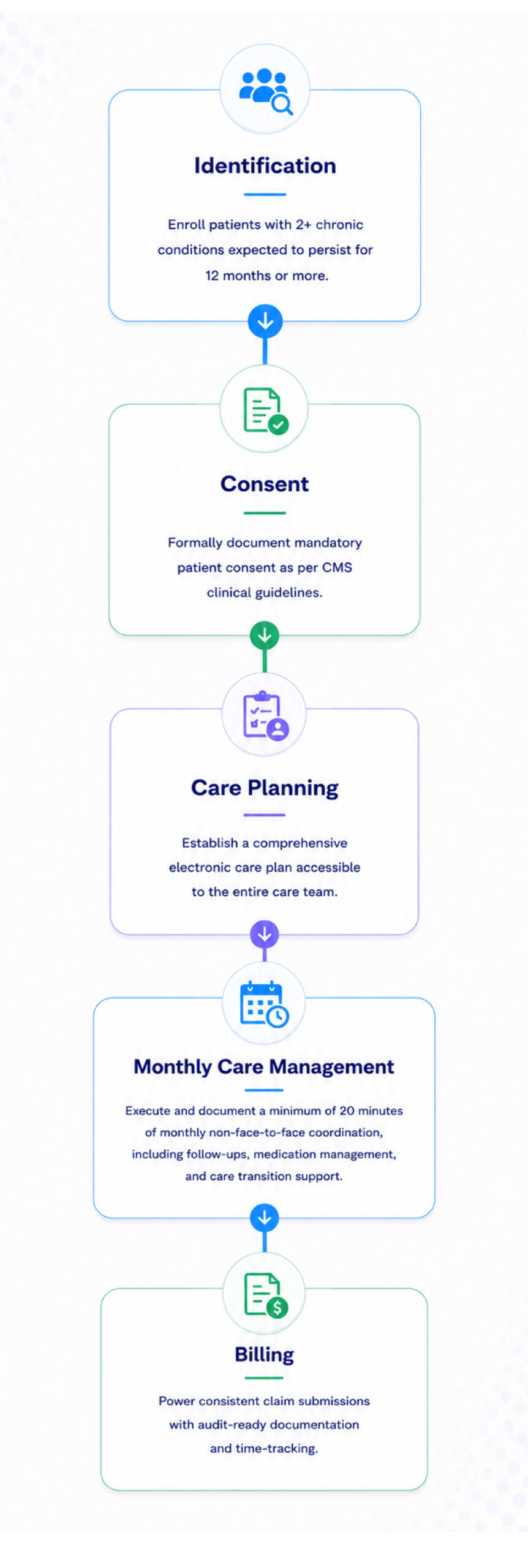
Identification
Enroll patients with 2+ chronic conditions expected to persist for 12 months or more.
Consent
Formally document mandatory patient consent as per CMS clinical guidelines.
Care Planning
Establish a comprehensive electronic care plan accessible to the entire care team.
Monthly Care Management
Execute and document a minimum of 20 minutes of monthly non-face-to-face coordination, including follow-ups, medication management, and care transition support.
Billing
Power consistent claim submissions with audit-ready documentation and time-tracking.
Most practices struggle with workflow consistency and documentation accuracy. Advaa Care unifies these processes into a single, compliant system.
See How Easy It Is to Launch CCMCCM CPT Codes & Revenue Potential
Chronic Care Management is one of the most reliable recurring revenue streams for primary care practices. Millions of Medicare patients qualify for CCM, yet many practices still underutilize structured chronic care management programs and associated reimbursement opportunities.
Key CCM CPT Codes
99490
20 minutes of clinical staff time
99439
Each additional 20 minutes
99487
Complex CCM (moderate/high complexity)
99489
Additional time for complex CCM
A small CCM program can generate predictable monthly revenue for primary care practices. Even a small CCM program can generate high-margin recurring revenue. Millions of Medicare patients qualify for CCM, yet many practices still underutilize this recurring revenue opportunity.
Intelligent CCM Workflow Automation
Unlike traditional CCM tools focused only on activity tracking, Advaa Care helps practices streamline patient engagement, improve workflow consistency, support compliance, and reduce missed reimbursement opportunities.
Patient Prioritization
Focus on high-risk, high-value patients

Time Optimization
Capture more billable minutes and reduce missed revenue

Engagement Automation
Ensure patients meet monthly interaction requirements

Predictive Insights
Identify care gaps and missed engagement risks earlier.

Documentation Automation
Stay audit-ready with structured records
What Practices Improve with Structured CCM Workflows
Practices using structured chronic care management workflows often improve operational consistency, patient engagement, and reimbursement performance across Medicare populations
Operational Improvements
Financial & Administrative
Patient Care Improvements
Common Operational Challenges in CCM
Built for Medicare Compliance
Advaa Care handles complex audit requirements automatically, ensuring your clinical workflows remain protected, accurate, and completely verifiable.
Built to align with CMS guidelines and reduce audit risk
Why Not Just Use Your EHR for CCM?
Most EHRs are not designed for CCM program execution
Why Choose Advaa Care CCM Software?
Advaa Care is not just CCM software—it’s a complete system to launch, manage, and scale your chronic care management program.
How to Start a Chronic Care Management Program
Identify Eligible Patients
Scan and segment your existing database to locate eligible chronic care populations automatically.
Configure Workflows
Map clinical protocols into optimized software tracking templates aligned with your staff routines.
Train Care Teams
Equip care managers and administrative teams with automated coordination tools.
Track & Bill Time
Log compliance metrics and interactions actively to capture clinical value accurately.
Frequently Asked Questions (FAQ)
What is chronic care management software?
It is a platform that helps providers manage patient care, track time, document interactions, and bill for CCM services.
How much can I earn from CCM?
Practices typically earn $60–$150 per patient per month, depending on complexity and engagement.
Is CCM covered by Medicare?
Yes, CCM is reimbursed by Medicare for eligible patients with two or more chronic conditions.
Do I need additional staff for CCM?
Not necessarily. With the right software and automation, existing staff can manage CCM efficiently.
Can CCM be combined with RPM?
Yes. Combining CCM and RPM increases both patient outcomes and revenue potential.