Remote Patient Monitoring for Continuous Care
Stay connected to every patient—even beyond the clinic—and deliver care that never stops.
What is Remote Patient Monitoring (RPM)?
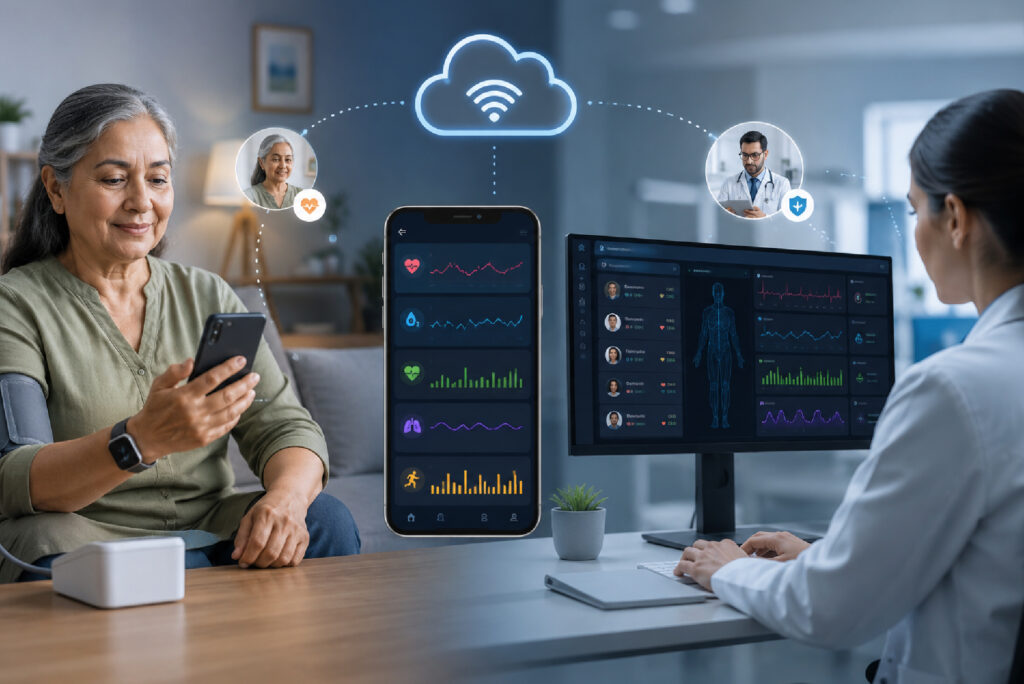
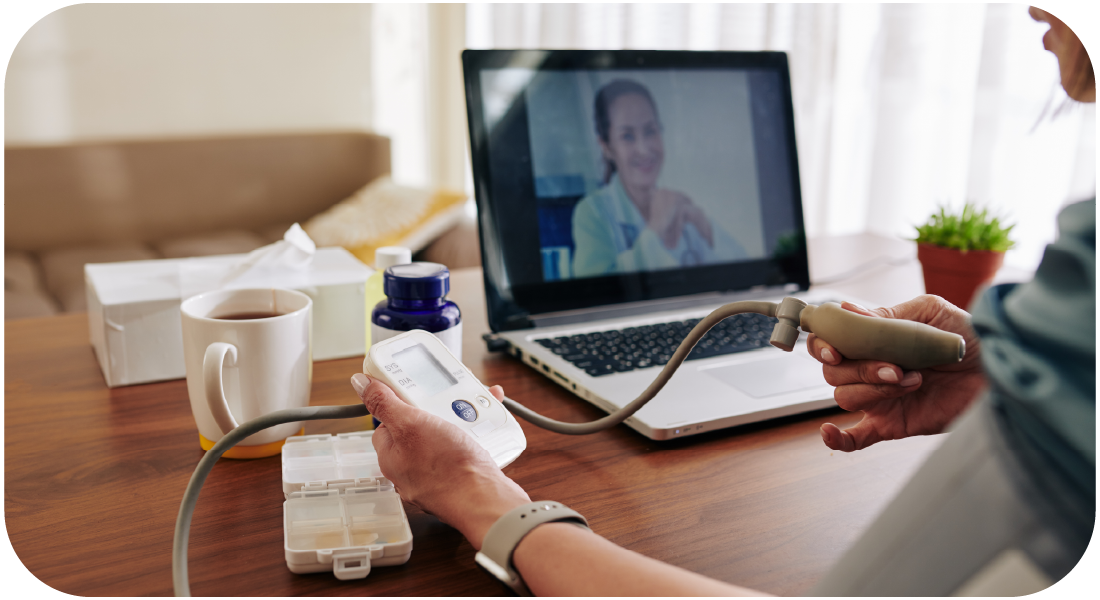
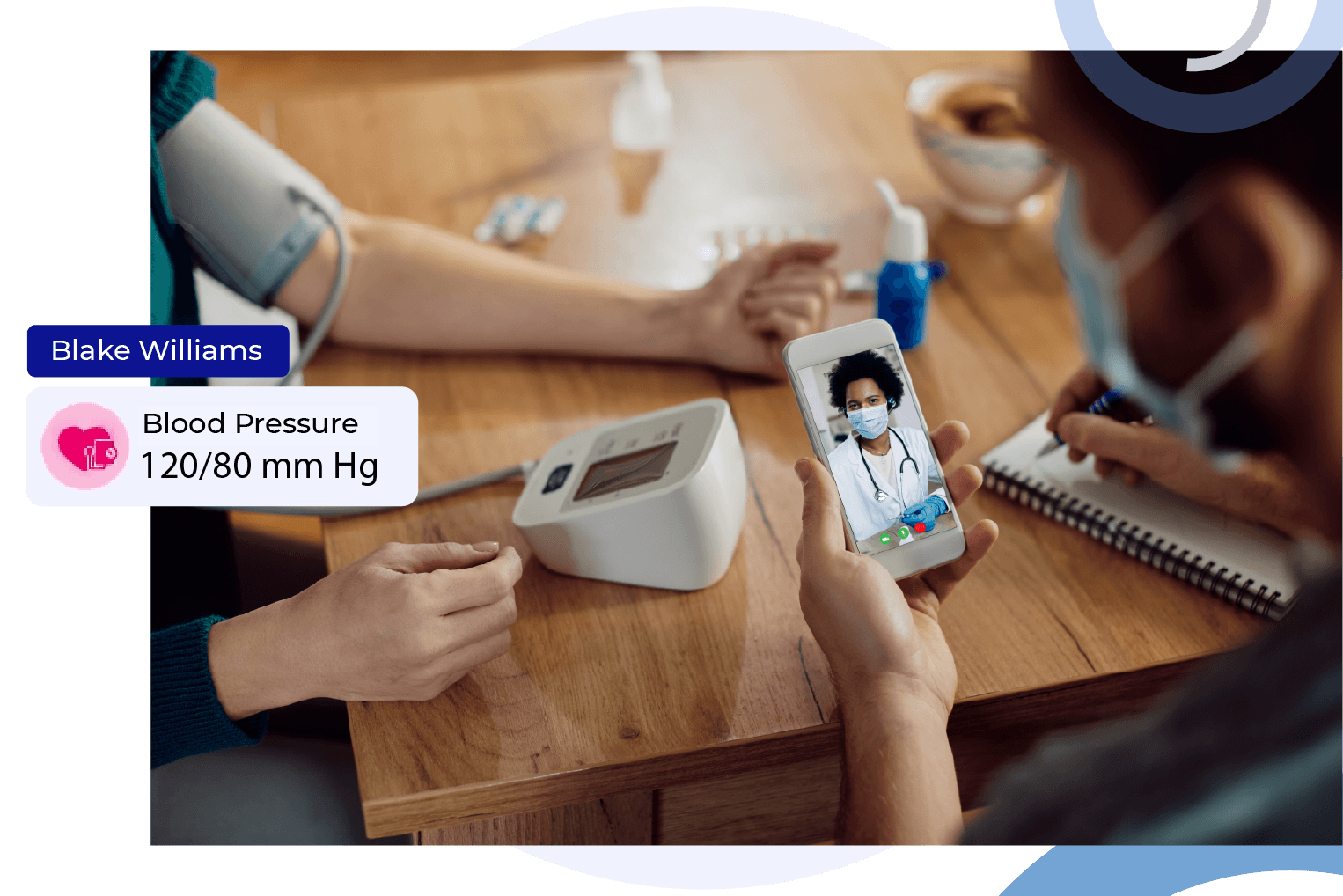
RPM allows providers to collect and analyze patient health data outside the clinic using connected medical devices. With AI-enabled RPM, patient vitals such as blood pressure, glucose levels, oxygen saturation, and weight are automatically transmitted to the care team. Advanced analytics continuously evaluate the data to identify trends, risks, and care opportunities—helping physicians intervene proactively and improve patient outcomes.
Key Features of Our RPM Platform

Real-time patient vital
monitoring
Automated patient reminders and engagement

AI-powered health trend analysis
Seamless EHR & practice management integration

CPT billing workflow
automation

HIPAA-compliant cloud infrastructure
Why Choose Advaa Care RPM Software?
Our integrated RPM solution enhances patient outcomes, drives operational efficiency, and reduces costs across your practice operations.
Built on secure infrastructure designed specifically for tight patient data encryption and medical compliance management.
Integrated with EHR & Practice Management
Fits seamlessly into your existing healthcare environment and workflows with zero disruptions.
Built for DPC & Independent Practices
Robust core architecture engineered to scale alongside actual patient growth, not just monitoring loops.
Automated Patient Engagement
Dramatically improves long-term treatment adherence, monitoring interaction, and clinic retention rates.
AI-Powered Monitoring & Predictive Insights
Intelligently transforms continuous flows of raw health vitals into actionable clinical data intelligence.
Revenue Optimization
Reimbursement-supported, CPT-aligned operations powered with automated, precise tracking logs.
Scalable Infrastructure
Enterprise-grade software stack capable of supporting rapid growth from 50 to 5,000+ active patients.
Remote Patient Monitoring Devices Supported
Our RPM platform integrates with FDA-approved monitoring devices including:

Blood pressure monitors

Digital weight
scales

Glucose
meters
Spirometer
Pulse
oximeters
Thermometer
Medication Adherence trackers
Advaa Health RPM Platform Tailored for Chronic Conditions

Cardiology
In cardiology, our RPM software supports remote cardiac care with real-time ECG monitoring, blood pressure tracking, and medication adherence tools—helping physicians detect early warning signs and manage cardiovascular conditions proactively.
Pulmonary
Our remote pulmonary monitoring platform includes spirometry readings, continuous oxygen saturation tracking, and symptom reporting to support proactive respiratory care and timely intervention for conditions like COPD and asthma.
Diabetes
For diabetes management, our remote patient monitoring system includes glucose monitoring, continuous glucose monitoring (CGM) integration, and lifestyle tracking—enabling personalized diabetes care and improved glycemic control.

Neurology
In neurology, our RPM platform supports remote monitoring through temperature tracking, PKG watch integration, cognitive function assessments, and medication adherence monitoring to enhance neurological care and enable timely interventions.
Obesity
Our remote monitoring services for obesity management include weight tracking, BMI monitoring, dietary compliance tracking, and behavioral health insights—supporting a comprehensive approach to long-term weight management.

Oncology
For oncology patients, our RPM platform enables temperature monitoring, symptom tracking, and seamless care coordination—helping physicians manage treatment side effects and improve the overall patient experience during cancer care.

Retina
For retinal health, our RPM solutions support monitoring for conditions such as Diabetic Retinopathy (DR), Diabetic Macular Edema (DME), and Age-Related Macular Degeneration (AMD), enabling earlier detection and timely intervention.
Dive Deeper into Advaa Health RPM Services
Download our guide to explore detailed insights, best practices, and outcomes for your practice.
Latest RPM CPT Codes & Medicare Reimbursement
CPT Code 99453
Initial setup and patient education
Average payment for RPM CPT Code 99453 $19-$22*
CPT Code 99454
Device supply with daily recordings
Average payment for RPM CPT Code 99454 $47-$52*
CPT Code 99457
First 20 minutes of clinical monitoring
Average Payment for RPM CPT Code 99457 $47-$58*
CPT Code 99458
Additional 20 minutes of monitoring
Average Payment for RPM CPT Code 99458 $38-$42*
CPT Code 99091
For time spent on collecting, interpreting, and processing physiological data for at least 30 minutes every 30 days.
Average Payment for RPM CPT Code 99091 $52-$59*
*Payments vary by location. Refer to CMS for details
Launch Your Remote Patient Monitoring Program in 4 Weeks
Advaa Health helps clinics implement RPM quickly and scale patient monitoring programs with minimal workflow disruption.
- Identifyeligible patients
- Deploy connected monitoring devices
- Automate patient engagement
- Monitor patient health data in real time
- Optimize Medicare RPM billing
Frequently Asked Questions (FAQ)
What is AI-powered Remote Patient Monitoring?
AI-powered RPM uses advanced analytics to detect trends, risks, and anomalies in patient health data, enabling proactive clinical interventions.
How does RPM Program generate revenue for physicians?
RPM Program generates revenue through Medicare CPT reimbursement codes based on patient monitoring and clinical care management activities.
How much can a practice earn from RPM?
Most practices generate $80–$150 per patient per month, depending on patient engagement and billing efficiency.
What devices are used in Remote Patient Monitoring?
RPM programs typically use connected medical devices such as blood pressure monitors, glucose meters, pulse oximeters, and digital weight scales.
Is RPM compliant with HIPAA?
Yes. When implemented using secure healthcare platforms such as Advaa Health, RPM programs comply with HIPAA data protection standards.
How long does it take to implement RPM?
Most healthcare practices can launch a fully operational RPM program within 4 weeks.
Is Remote Patient Monitoring covered by Medicare?
Yes. Medicare reimburses RPM services through CPT codes such as 99453, 99454, 99457, and 99458 when RPM services meet eligibility and documentation requirements.
Which patients qualify for RPM programs?
Patients with chronic conditions such as hypertension, diabetes, COPD, and heart disease are commonly eligible for RPM programs.